

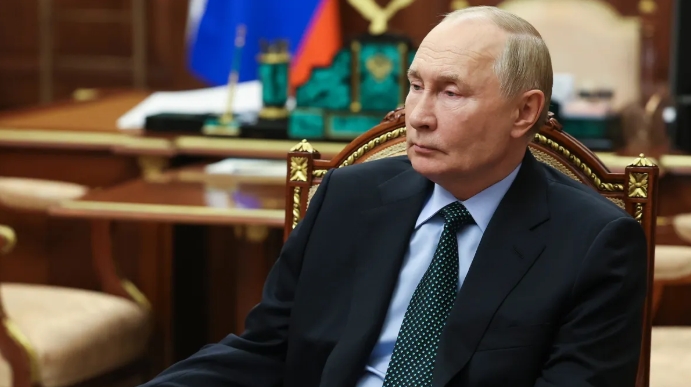
Russian President Vladimir Putin is preparing to host the fifth wartime edition of the St. Petersburg International Economic Forum (SPIEF), often referred to as the “Russian Davos,” as Moscow confronts slowing economic growth, persistent sanctions pressure and rising concerns over the long-term sustainability of its war-driven economy.
The annual forum, which opens this week in St. Petersburg, has traditionally served as Russia’s showcase for foreign investors and global business leaders. But in 2026, the event comes at a difficult moment for the Kremlin. Analysts say the country is running short of new economic growth drivers after years of relying heavily on energy revenues, wartime industrial production and state spending linked to the conflict in Ukraine.
Russia’s Economy Loses Momentum
Russia’s economy expanded sharply during the first years of the Ukraine war, largely due to massive government defense spending and industrial mobilization. However, the pace of growth has slowed significantly.
According to Reporters reporting ahead of the forum, Russia’s economy grew only around 1% in 2025 after posting much stronger growth in 2024. The country’s economy also reportedly contracted slightly during the opening months of 2026, highlighting mounting pressure from high interest rates, labor shortages, sanctions, and weaker investment activity.
Economists say many of the factors that previously fueled Russian growth are now fading. Foreign investment has declined sharply since Western sanctions intensified after the invasion of Ukraine, while high borrowing costs and tax increases aimed at financing the war have reduced private-sector confidence.
Former Russian central bank official Oleg Vyugin told Reuters that the government has limited tools left to revive strong economic growth under current conditions.
“Russian Davos” Under Wartime Conditions
SPIEF has long been viewed as Russia’s answer to the World Economic Forum in Davos, Switzerland. Founded in 1997, the event historically attracted global CEOs, investors and political leaders seeking opportunities in the Russian market.
Since the start of the Ukraine war in 2022, however, Western participation has dropped dramatically. Many multinational corporations exited Russia following sanctions and political pressure, leaving the forum increasingly focused on partnerships with countries in Asia, the Middle East, Africa and Latin America.
This year’s SPIEF theme centers on finding new sources of economic growth. Russian officials are expected to promote strategies including digitalization, artificial intelligence development, infrastructure investment, import substitution, and stronger trade ties with non-Western economies.
Saudi Arabia has reportedly been invited as a key guest country at the forum, reflecting Moscow’s ongoing effort to deepen ties with Gulf nations and other Global South partners.
Wartime Spending Still Driving Growth
One of the major themes hanging over the forum is the extent to which Russia’s economic performance remains dependent on military production and wartime spending.
Defense manufacturing has helped sustain industrial output and employment in sectors connected to weapons production, logistics, and heavy industry. But analysts warn that this model may not support sustainable long-term development.
Experts attending SPIEF are expected to debate how Russia can transition from emergency wartime growth toward a broader, more balanced economy driven by productivity, technology, and consumer demand.
Some economists have described the current system as a “wartime economy” heavily dependent on state intervention and military procurement. Others warn that sanctions, reduced access to Western technology, and labor shortages are creating deeper structural problems for the Russian economy.
Labor Shortages and Inflation Concerns
Russian businesses are also facing increasing labor shortages as military recruitment, emigration, and demographic decline shrink the available workforce.
Industries including manufacturing, construction, transportation, and technology have reported difficulties finding skilled workers, forcing companies to raise wages and increasing inflationary pressure across the economy.
The Russian central bank has maintained high interest rates in an attempt to control inflation, but those policies have also made borrowing more expensive for businesses and consumers.
Analysts say balancing inflation control with economic growth will remain one of the Kremlin’s biggest challenges in the coming years.
Kremlin Pushes Message of Economic Resilience
Despite mounting challenges, Putin and senior Russian officials continue to project confidence about the country’s economic future.
Ahead of the forum, Putin said Russia remains an “integral part of the global economic system” and emphasized cooperation in energy, digitalization, food security, and financial sovereignty.
Russian officials are expected to use SPIEF to demonstrate that the country remains economically resilient despite Western sanctions and geopolitical isolation.
The Kremlin also hopes the forum will help attract investment from non-Western partners while reinforcing Moscow’s vision of a “multipolar” global economic order less dependent on Europe and the United States.
Uncertain Outlook Ahead
While Russian authorities argue that the economy has adapted successfully to wartime conditions, many economists remain skeptical about long-term prospects without major structural reforms or a reduction in geopolitical tensions.
Peace talks over Ukraine remain stalled, and sanctions relief appears unlikely in the near future. Analysts say that without new private investment, stronger productivity growth, or improved international trade conditions, Russia could face several years of weak expansion.
As Putin opens another edition of the “Russian Davos,” the forum is expected to highlight both the resilience and the growing vulnerabilities of Russia’s wartime economy and the difficult questions facing the Kremlin about where future growth will come from.
________________________________________________________________________________________________________________

