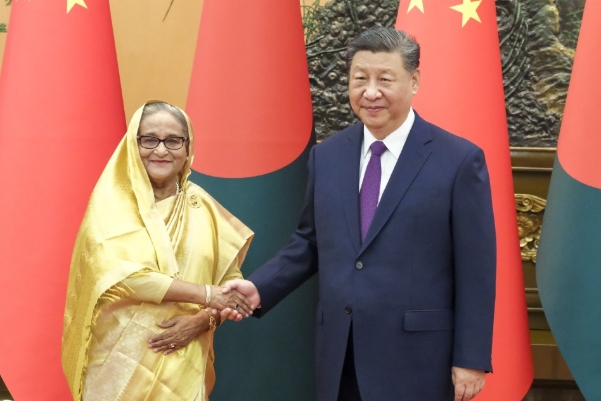
China and Bangladesh agree to expand trade, investment and infrastructure ties as leaders meet in Beijing
Chinese President Xi Jinping and Bangladeshi Prime Minister Tarique Rahman have pledged to deepen their countries’ comprehensive strategic cooperative partnership, agreeing to expand collaboration in trade, investment, infrastructure, emerging technologies and regional development during high-level talks in Beijing.
The meeting, held at the Great Hall of the People, marked the centerpiece of Rahman’s first official visit to China since taking office earlier this year. The visit underscores Dhaka’s efforts to strengthen economic ties with Beijing while maintaining balanced relations with other regional powers.
Leaders commit to stronger strategic partnership
President Xi said China is ready to work closely with Bangladesh to consolidate strategic mutual trust, expand practical cooperation and deliver greater benefits to the people of both countries.
He reaffirmed Beijing’s support for Bangladesh’s development priorities and said China would continue promoting high-quality cooperation under the Belt and Road Initiative (BRI), encouraging greater investment by Chinese companies and increasing imports of Bangladeshi products.
Prime Minister Rahman described China as one of Bangladesh’s most important development partners and reiterated his government’s commitment to strengthening bilateral relations.
He reaffirmed Bangladesh’s adherence to the One-China policy and expressed appreciation for China’s long-standing support in infrastructure development, trade and economic modernization.
Trade and investment at the forefront
Economic cooperation dominated discussions between the two leaders.
Rahman urged China to reduce the trade imbalance by increasing imports of Bangladeshi goods, including agricultural products, seafood, pharmaceuticals, leather products and jute-based exports.
He also called for greater Chinese support for Bangladesh’s major infrastructure and industrial projects while encouraging more Chinese manufacturers to establish production facilities in the country.
China is already one of Bangladesh’s largest trading partners and a major source of development finance, with Chinese investment playing a significant role in transport, energy, telecommunications and industrial infrastructure.
New agreements signed
Ahead of the leaders’ meeting, Bangladesh and China signed 13 Memorandums of Understanding (MoUs) and two bilateral agreements covering a wide range of sectors.
The agreements include cooperation in trade, investment, infrastructure development, water resource management, digital technology, artificial intelligence, renewable energy, information and communications technology and economic development.
Officials from both countries said the new agreements are expected to elevate bilateral cooperation to a new level and create fresh opportunities for businesses and investors.
Focus on emerging industries
President Xi highlighted China’s willingness to deepen cooperation in high-growth sectors, including artificial intelligence, digital economy, clean energy and advanced manufacturing.
Bangladesh has identified these industries as key pillars of its long-term economic transformation and hopes stronger collaboration with China will accelerate technology transfer, industrial development and job creation.
Rahman also invited Chinese companies to expand their manufacturing operations in Bangladesh, describing the country as an attractive destination for global supply chains due to its strategic location, competitive workforce and ongoing economic reforms.
Regional and global cooperation
Beyond economic issues, the two leaders exchanged views on regional security and multilateral cooperation.
Xi said China and Bangladesh should strengthen coordination on international platforms, support the interests of developing countries and contribute to greater stability and development across the Global South.
Rahman reaffirmed Bangladesh’s commitment to maintaining constructive relations with all major partners while pursuing an independent foreign policy focused on economic growth and regional peace.
Balancing regional relationships
Analysts say Rahman’s visit reflects Bangladesh’s efforts to deepen economic engagement with China while maintaining productive ties with neighboring India and other international partners.
Although Bangladesh has historically maintained close relations with both Beijing and New Delhi, the current government is seeking greater foreign investment and expanded export markets to sustain economic growth.
The strengthened partnership with China is expected to play an important role in achieving those objectives through increased infrastructure financing, industrial cooperation and technology investment.
Looking ahead
The commitments made during the Beijing summit signal a new phase in China-Bangladesh relations, with both governments aiming to broaden cooperation beyond traditional infrastructure projects into advanced industries, digital innovation and sustainable development.
As global geopolitical competition intensifies, the two countries appear determined to build a stronger economic partnership while expanding collaboration on regional and international issues, reinforcing one of South Asia’s most significant strategic relationships.
________________________________________________________________________________________________________________