Manama says diplomatic breakthrough and renewed maritime traffic will boost regional stability, energy security and economic confidence
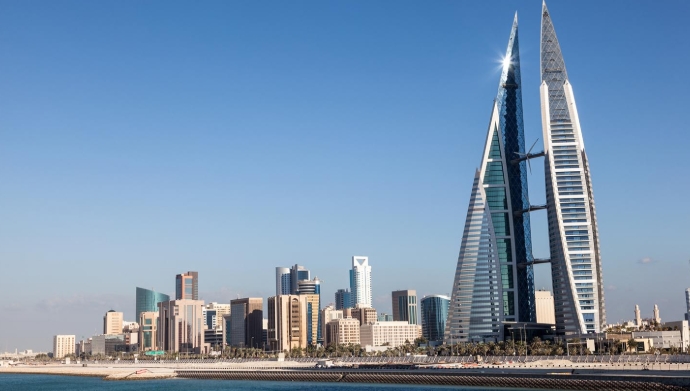
Bahrain has welcomed the preliminary agreement between the United States and Iran aimed at easing regional tensions, describing the diplomatic breakthrough as an important step toward restoring stability in the Gulf and ensuring the safe passage of commercial shipping through the Strait of Hormuz.
The Bahraini government also praised the gradual reopening of the Strait of Hormuz to normal maritime traffic, saying the development would strengthen global energy security, support international trade and reduce uncertainty that has gripped financial and energy markets following weeks of military confrontation.
The statements came after U.S. Secretary of State Marco Rubio concluded a diplomatic tour of Gulf states, where he sought to reassure regional allies that the Trump administration’s engagement with Tehran would not compromise their security interests. Bahrain, a close U.S. ally and host to the U.S. Navy’s Fifth Fleet, has been among the Gulf nations most affected by recent tensions in the strategically vital waterway.
Support for diplomacy
Bahrain welcomed Washington’s efforts to pursue diplomacy while maintaining pressure on Iran to meet its international obligations.
Officials said dialogue remains the best path toward reducing tensions and preventing further conflict, provided that any agreement includes effective measures to ensure regional security and prevent Iran from developing nuclear weapons.
The kingdom reiterated its support for international initiatives aimed at promoting peace, stability and freedom of navigation throughout the Gulf.
Strait of Hormuz resumes normal operations
The gradual return of commercial shipping through the Strait of Hormuz has been welcomed by Bahrain’s government and business community.
The waterway, through which nearly a fifth of the world’s seaborne oil passes, experienced significant disruption during recent hostilities involving Iran, Israel and the United States. Several shipping companies temporarily rerouted vessels or delayed sailings due to security concerns, while insurance premiums for ships operating in the region rose sharply.
Although traffic has begun returning to normal following the ceasefire framework, authorities continue to monitor maritime security closely after isolated attacks on commercial vessels highlighted the ongoing risks facing shipping in the Gulf.
Bahrain emphasized that keeping the Strait of Hormuz open is essential not only for regional economies but also for global energy markets that depend on uninterrupted oil and liquefied natural gas exports from Gulf producers.
Economic confidence expected to improve
Analysts say improved security conditions in the Gulf are likely to ease pressure on global energy markets and encourage renewed investment across the region.
Oil prices have retreated from the highs reached during the conflict, while shipping activity has steadily recovered as confidence among commercial operators improves.
For Bahrain, whose economy is closely linked to regional trade and financial services, the restoration of stability is expected to support business confidence, tourism and investment.
Government officials said secure maritime trade routes remain critical for sustaining economic growth and strengthening Bahrain’s position as a regional financial and logistics hub.
Continued security cooperation
Despite welcoming diplomatic progress, Bahrain stressed that regional security challenges remain.
The kingdom reaffirmed its commitment to working closely with the United States and Gulf Cooperation Council (GCC) partners to safeguard maritime security, combat terrorism and counter threats posed by armed groups operating across the Middle East.
Officials also underscored the importance of continued international cooperation to protect critical shipping lanes and energy infrastructure from future attacks.
Gulf states seek lasting agreement
Bahrain joins other Gulf Arab states in supporting a comprehensive agreement that addresses not only Iran’s nuclear activities but also its ballistic missile program, drone capabilities and support for regional proxy groups.
Regional leaders have repeatedly emphasized that any lasting settlement must provide verifiable security guarantees and preserve freedom of navigation through international waterways.
During his Gulf visit, Secretary Rubio assured leaders that the United States remains committed to protecting its allies while pursuing diplomacy with Tehran.
Looking ahead
While Gulf governments have welcomed the reduction in tensions, officials caution that lasting peace will depend on all parties honoring their commitments and avoiding actions that could reignite conflict.
For Bahrain, the reopening of the Strait of Hormuz and renewed diplomatic engagement between Washington and Tehran represent an opportunity to strengthen regional stability, restore confidence in global energy markets and reinforce international cooperation in one of the world’s most strategically important regions.
________________________________________________________________________________________________________________