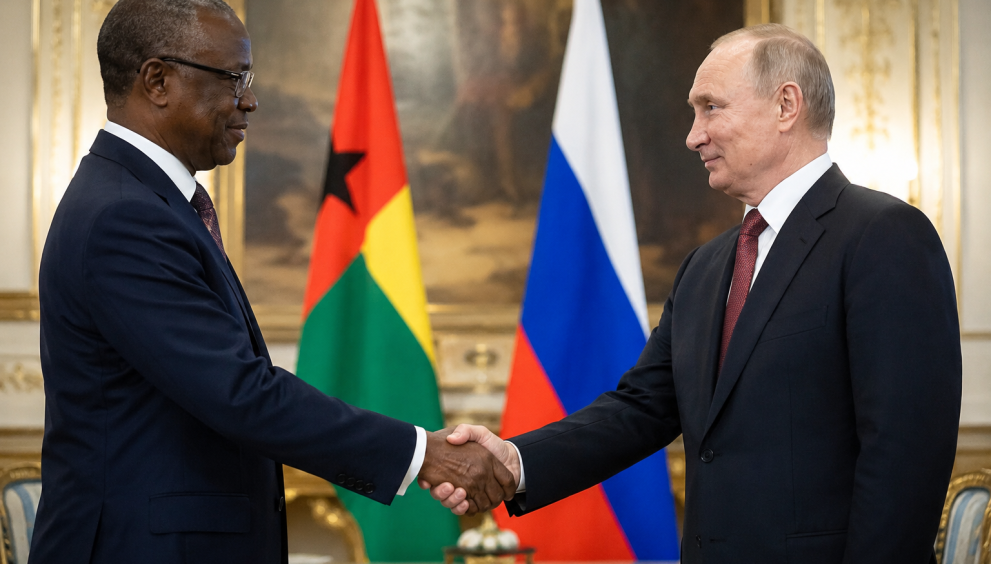
Russia and Guinea-Bissau have reaffirmed their commitment to strengthening bilateral relations following high-level talks in Moscow, with both nations pledging closer cooperation across economic, trade, security, education, and infrastructure sectors as Moscow continues expanding its diplomatic engagement across Africa.
The discussions, held between Russian President Vladimir Putin and Guinea-Bissau’s leadership, highlighted what both sides described as a long-standing partnership built on decades of diplomatic ties dating back to the Soviet era. Officials emphasized their intention to transform the relationship into a broader strategic partnership focused on mutual economic development and regional stability.
Focus on Economic Cooperation
A central theme of the talks was expanding trade and investment opportunities.
Russia expressed interest in increasing cooperation in mining, agriculture, fisheries, energy, transport, and infrastructure development. Guinea-Bissau, which possesses significant natural resources including bauxite reserves and a growing agricultural sector, is seeking foreign investment to diversify its economy and improve industrial capacity.
Officials also discussed improving commercial exchanges between the two countries, encouraging Russian businesses to explore investment opportunities while supporting Guinea-Bissau’s long-term development priorities.
Russia has increasingly promoted economic partnerships across Africa through infrastructure projects, debt relief initiatives, and investment agreements, positioning itself as an alternative partner for many African nations.
Security and Defense Cooperation
Security cooperation also featured prominently during the meetings.
Both governments reaffirmed their intention to continue collaboration on defense, military training, counterterrorism, and regional security matters. Although few operational details were disclosed, officials indicated that existing security cooperation could be expanded through additional technical assistance and professional exchanges.
Russia has steadily increased defense partnerships with several African countries in recent years as part of its broader diplomatic strategy across the continent.
Education, Technology and Human Development
The two countries also agreed to deepen cooperation beyond traditional security and trade sectors.
Officials discussed expanding educational scholarships, scientific collaboration, technical training, healthcare cooperation, and cultural exchanges aimed at strengthening people-to-people ties.
Russia has historically offered educational opportunities to students from Guinea-Bissau, and both governments signaled interest in expanding academic partnerships that could help develop skilled professionals in key sectors.
Historic Diplomatic Relationship
Relations between Russia and Guinea-Bissau stretch back more than five decades.
The Soviet Union was among the early supporters of Guinea-Bissau during its struggle for independence from Portugal, and diplomatic relations were formally established in 1973. Since then, cooperation has included military assistance, educational exchanges, economic agreements, and cultural partnerships.
In recent years, Moscow has sought to revitalize these historic relationships as part of its wider engagement with African nations through the Russia–Africa partnership framework.
Russia Expands African Engagement
The Moscow talks come as Russia continues strengthening ties with countries across Africa through high-level diplomatic visits, investment discussions, and cooperation agreements covering energy, mining, food security, infrastructure, and security.
Russian officials have repeatedly stated that Africa remains a strategic foreign policy priority, with Moscow aiming to increase trade, investment, and political cooperation throughout the continent.
For Guinea-Bissau, closer relations with Russia could provide additional investment opportunities while supporting national development goals through diversified international partnerships.
Looking Ahead
While no major agreements were publicly announced following the latest talks, both governments pledged to maintain regular high-level dialogue and accelerate work on existing cooperation projects.
Officials indicated that future engagements will focus on translating political commitments into practical initiatives that benefit both nations through increased trade, investment, infrastructure development, and broader economic cooperation.
The renewed partnership reflects both countries’ desire to build upon their historical relationship while adapting cooperation to meet current geopolitical and economic priorities.
________________________________________________________________________________________________________________