Tshisekedi Seeks Talks Amid Controversy Over Constitutional Reforms and Possible Third Term
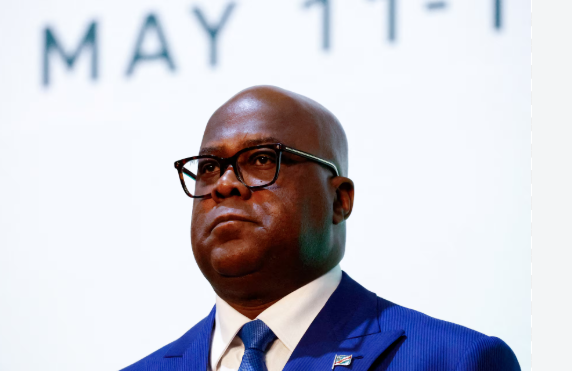
Democratic Republic of Congo President Félix Tshisekedi has announced plans for a national dialogue aimed at easing growing political tensions in the country.
The announcement comes amid controversy over proposed constitutional reforms that critics fear could clear the way for Tshisekedi to seek a third presidential term.
Tshisekedi said the dialogue will begin with consultations across the Democratic Republic of Congo’s 26 provinces before culminating in national discussions in the capital, Kinshasa. The president has presented the initiative as an effort to promote political stability and address concerns facing the country.
REBELS EXCLUDED FROM THE DIALOGUE
A major point of contention is Tshisekedi’s decision to exclude rebel groups from the process.
The M23/AFC rebel movement, which has seized significant territory in eastern Congo, will not participate in the proposed national dialogue. Tshisekedi has maintained that armed groups should not be treated as political participants in the country’s constitutional and political process.
The decision is likely to complicate efforts to address the wider crisis in eastern Congo, where armed conflict has displaced large numbers of civilians and created a major security challenge for the government.
THIRD-TERM QUESTIONS
The proposed dialogue also comes at a politically sensitive moment.
Critics of constitutional reforms currently under discussion fear that changes to the country’s political system could ultimately allow Tshisekedi to remain in office beyond the two-term limit.
That concern has made the proposed dialogue particularly important. Opposition figures and other political actors are likely to demand assurances that any constitutional reform will not be used to extend presidential power.
One major criticism is that a national dialogue cannot genuinely reduce political tensions if its participants do not have confidence in the political process or if key voices are excluded.
A TEST FOR CONGO’S DEMOCRATIC FUTURE
The initiative therefore presents Tshisekedi with a difficult balancing act.
On one side, the government says dialogue is necessary to reduce political tensions and strengthen national cohesion. On the other, critics want greater clarity over the proposed constitutional reforms and the president’s intentions regarding a possible third term.
The exclusion of armed groups adds another complication, particularly because the security crisis in eastern Congo remains one of the country’s most serious challenges.
For the dialogue to have a meaningful impact, it will need to address not only political disagreements in Kinshasa but also the deeper questions surrounding constitutional limits, presidential power, opposition participation and national security.
The coming consultations across the provinces will therefore be closely watched.
For the Democratic Republic of Congo, the central question is whether the proposed dialogue can become a genuine avenue for political reconciliation or whether it will deepen existing disagreements over the country’s democratic direction and the future of presidential power.