Iran’s foreign minister announced that the country will meet with representatives from Britain, France, and Germany in Rome on Friday to discuss the status of the 2015 nuclear agreement. The meeting comes just before the next round of nuclear discussions between Iran and the United States, scheduled for Saturday.
The 2015 accord, intended to limit Iran’s nuclear program, began to unravel in 2018 when then-U.S. President Donald Trump withdrew from the deal. Despite recent tensions, Iran has proposed renewed discussions with the three European signatories, collectively referred to as the E3.
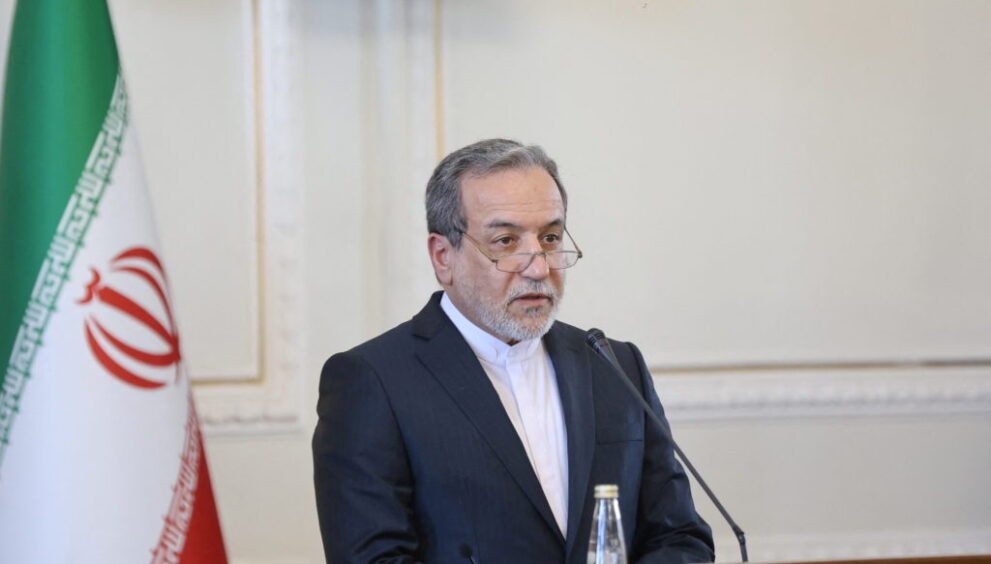
Iranian Foreign Minister Abbas Araqchi commented on the diminished influence of the European trio in the ongoing nuclear dialogue, attributing it to what he called misguided policies. Nonetheless, he stated that Iran remains open to discussions in Rome.
Initially, the European nations were reluctant to engage, fearing that a separate track could disrupt ongoing negotiations between Tehran and Washington. However, sources familiar with the matter said the European governments ultimately concluded that continued dialogue with Iran was in their interest. They aim to reiterate their vision for any potential new nuclear agreement.
Ahead of Friday’s Rome meeting, European foreign ministry officials held discussions with U.S. counterparts in Berlin to align positions based on earlier rounds of talks.
Iran is hoping to build on momentum from recent talks with U.S. representatives in Oman, as well as previous meetings with Russian and Chinese officials. The upcoming session in Rome will bring Iranian and American negotiators together again.
By reaching out to the E3, Iran appears to be gauging their position on the possible reactivation of international sanctions, a process known as the “snapback mechanism,” which could come into play when a key U.N. resolution tied to the 2015 deal expires in October.
Strained European-Iranian Relations
Tensions between Iran and the European powers have grown over the past year. Sporadic meetings have taken place since last September, but relations have been strained by fresh sanctions related to Iran’s missile activities, its imprisonment of foreign nationals, and its support for Russia in the conflict in Ukraine.
In a recent statement, French Foreign Minister Jean-Noel Barrot warned that Paris would support reimposing sanctions if the current diplomatic efforts fail, emphasizing the severe consequences such a move could have on Iran’s economy. He also accused Iran of nearing the capability to secretly develop a nuclear weapon — a claim Iran denies, maintaining that its uranium enrichment is solely for civilian energy use.
In response, Iran’s ambassador to the United Nations, Amir Saeid Iravani, condemned the French minister’s remarks in a letter to the U.N. Security Council, describing them as baseless and provocative. He argued that triggering the snapback mechanism would be illegitimate and coercive.
Meanwhile, the U.S. Treasury announced fresh sanctions on a network based in Iran and China, allegedly involved in sourcing materials for ballistic missile production for Iran’s Islamic Revolutionary Guard Corps. Araqchi criticized the move, saying it sends a negative signal amid ongoing talks.
Former President Trump has expressed optimism that a new agreement could be reached that would effectively prevent Iran from acquiring nuclear weapons.