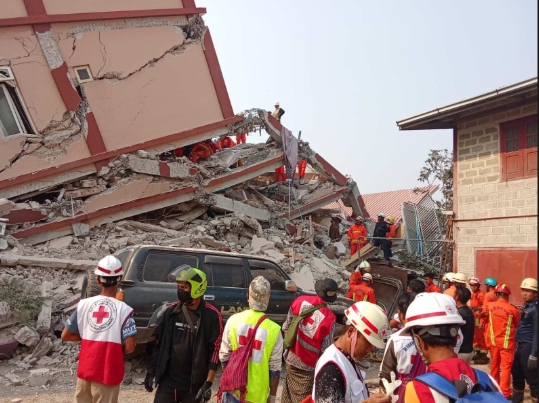
Massive 7.2 and 7.5 magnitude quakes flatten buildings, overwhelm emergency services and leave thousands feared dead
Rescue teams across Venezuela are working around the clock to locate survivors after two powerful earthquakes struck the country’s northern coast within seconds of each other, causing catastrophic destruction, killing hundreds of people and leaving thousands feared trapped beneath collapsed buildings.
The twin earthquakes, measuring 7.2 and 7.5 in magnitude, struck on Wednesday, shaking much of northern Venezuela and sending shockwaves across neighboring Caribbean countries. The disaster has been described by seismologists as one of the strongest and most destructive seismic events to hit the South American nation in more than a century.
Authorities have confirmed that the death toll continues to rise as emergency responders search through the rubble of collapsed apartment blocks, hospitals, schools and office buildings. Officials warned that the number of fatalities is expected to increase significantly as rescue operations continue and communications are restored in isolated areas.
Race against time
Search-and-rescue crews, supported by firefighters, soldiers, police officers and volunteers, are using heavy machinery, sniffer dogs and specialized equipment to locate survivors buried beneath the debris.
Emergency workers have managed to pull several people alive from collapsed structures, offering moments of hope amid widespread devastation. However, officials say hundreds of people remain missing, and thousands are believed to be trapped under damaged buildings.
Rescuers face enormous challenges as aftershocks continue to shake the region, forcing crews to temporarily halt operations whenever unstable structures threaten to collapse.
“We are doing everything possible to save lives,” emergency officials said as rescue efforts continued through the night.
Widespread destruction
The earthquakes caused extensive damage across Caracas and the neighboring coastal state of La Guaira, where roads cracked open, bridges were damaged and power lines collapsed.
Entire residential neighborhoods were reduced to rubble, while hospitals struggled to cope with the growing number of injured patients arriving every hour.
Electricity and water supplies were disrupted in several regions, and telecommunications networks suffered widespread outages, making it difficult for families to contact loved ones.
Caracas’ main international airport also reported operational disruptions as authorities assessed structural damage and prioritized humanitarian flights carrying rescue personnel and emergency supplies.
State of emergency declared
The Venezuelan government has declared a nationwide state of emergency in the worst-affected areas, mobilizing the military and civil protection agencies to assist rescue operations.
Temporary shelters have been established for thousands of residents forced from their homes, while emergency food, water and medical supplies are being distributed across affected communities.
Officials urged residents to avoid damaged buildings and remain alert for powerful aftershocks, warning that weakened structures remain at risk of collapse.
International aid begins arriving
Governments and humanitarian organizations from around the world have begun mobilizing assistance for Venezuela.
Several countries have pledged search-and-rescue teams, field hospitals, emergency medical personnel and humanitarian aid to support local authorities overwhelmed by the scale of the disaster.
The United Nations is coordinating international relief efforts, while humanitarian agencies are preparing to deliver food, clean water, emergency shelter and medical assistance to thousands of displaced families.
Meanwhile, satellite communications providers have offered emergency internet services to help restore communications in areas where conventional networks remain offline.
Rare earthquake doublet
Geologists say the disaster was caused by a rare “earthquake doublet,” where two major earthquakes occur within moments of each other along the same fault system.
The back-to-back tremors dramatically increased the destructive force of the disaster, causing buildings already weakened by the first quake to collapse during the second.
Scientists warn that strong aftershocks are likely to continue for days or even weeks, creating ongoing risks for rescue workers and residents returning to damaged neighborhoods.
Humanitarian crisis unfolds
Hospitals throughout the affected region remain overwhelmed as doctors and nurses treat thousands of injured people suffering fractures, crush injuries and trauma.
Relief agencies warn that shortages of clean drinking water, fuel, medicines and emergency shelter could worsen the humanitarian situation if access to affected communities remains limited.
Aid organizations are also raising concerns about vulnerable populations, including children, the elderly and people with disabilities who may require additional assistance during recovery efforts.
Recovery expected to take years
While rescue operations remain the immediate priority, authorities have begun assessing the enormous economic damage caused by the earthquakes.
Thousands of homes have been destroyed or severely damaged, along with schools, hospitals, government buildings and transportation infrastructure.
Economists warn that rebuilding affected regions could take years and require billions of dollars in reconstruction funding.
As rescue teams continue their desperate search for survivors, Venezuela faces what officials describe as one of the most devastating natural disasters in the country’s modern history, with the full scale of the tragedy still unfolding.
________________________________________________________________________________________________________________