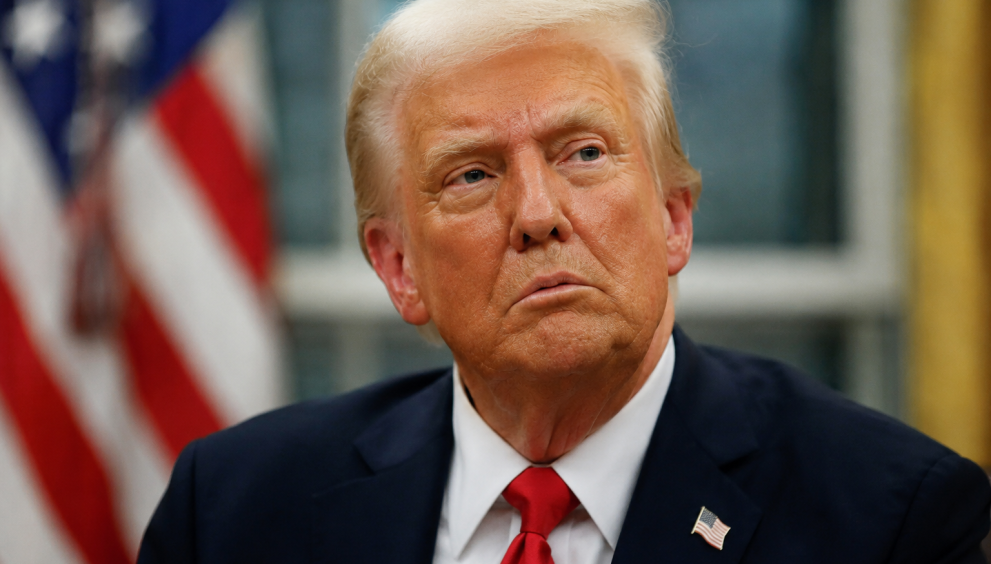
U.S. President Donald Trump has declared that the United States will become the “guardian” of the Strait of Hormuz, saying Washington should take control of the strategic waterway and be compensated by allied nations for ensuring its security as tensions with Iran continue to escalate.
Speaking during a television interview on Monday, Trump argued that the United States has borne the burden of protecting one of the world’s most critical maritime trade routes and said it was time for other nations benefiting from the passage to share the financial cost.
“We’re taking over the strait,” Trump said, adding that the United States would serve as the waterway’s “guardian” or “guardian angel” and should be reimbursed for maintaining security.
Strategic Waterway at the Center of Global Tensions
Trump’s remarks come as fighting between U.S. and Iranian forces has intensified across the Gulf region. Over the weekend and into Monday, both sides exchanged missile and drone attacks, while commercial shipping through the Strait of Hormuz remained heavily disrupted amid growing security concerns.
The Strait of Hormuz is regarded as one of the world’s most important energy chokepoints, carrying roughly one-fifth of global seaborne oil supplies as well as significant volumes of liquefied natural gas. Any disruption to shipping through the narrow passage has immediate implications for international energy markets and global inflation.
Iran Rejects U.S. Position
Iran’s Revolutionary Guards have rejected Washington’s stance, insisting that U.S. military operations in the region are responsible for the deteriorating security situation. Iranian officials have argued that normal shipping can only resume if U.S. military intervention in the area ends, warning that continued American involvement could trigger further incidents affecting global energy supplies.
The latest escalation has further undermined prospects for diplomatic negotiations between Washington and Tehran after earlier efforts to stabilize the region and restore commercial navigation through the Strait.
Markets Watching Closely
Energy markets are closely monitoring developments as uncertainty over shipping routes continues to drive volatility in crude oil prices. Analysts warn that any prolonged disruption to traffic through the Strait of Hormuz could tighten global energy supplies, increase transportation costs, and place additional pressure on inflation worldwide.
Trump has not outlined how the United States would formally assume control of the waterway or which countries would be expected to finance such an arrangement, leaving questions over the legal and diplomatic implications of the proposal.
_______________________________________________________________________________________________________________