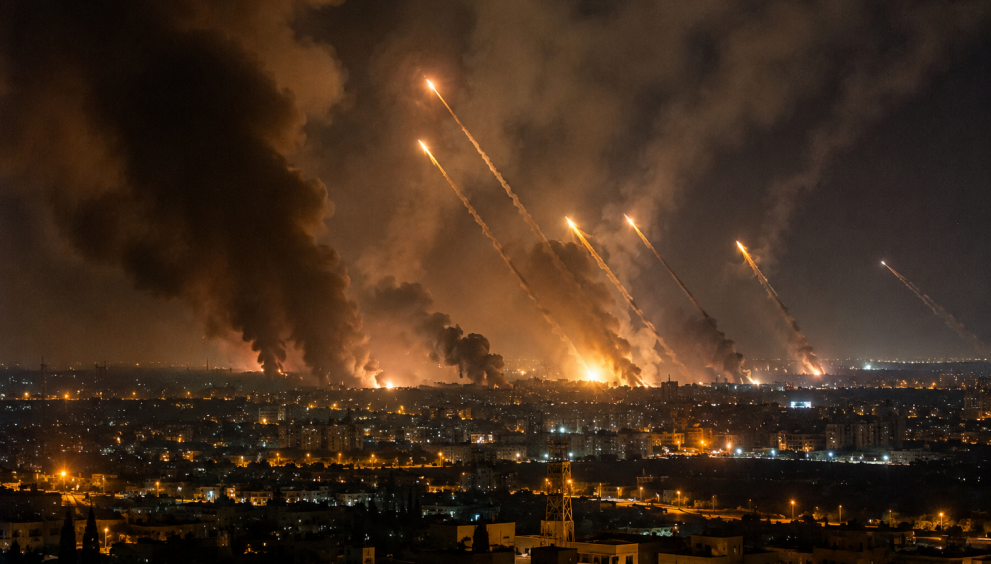
The conflict between Iran and the United States has escalated sharply after Iran launched a new wave of missile and drone strikes against U.S.-linked military targets across the Gulf region following a fourth consecutive night of intensive American airstrikes on Iranian military infrastructure.
The latest exchange marks one of the most dangerous phases of the ongoing confrontation, raising fears of a wider regional conflict involving multiple Gulf states and threatening global energy supplies.
Iran Responds to Overnight U.S. Offensive
Iran’s Islamic Revolutionary Guard Corps (IRGC) said it carried out coordinated retaliatory strikes against military facilities associated with the United States in Bahrain, Kuwait and Jordan after American forces launched dozens of attacks on military positions along Iran’s southern coastline near the Strait of Hormuz.
Iranian officials described the operation as a response to what they called continued U.S. aggression and vowed that further attacks would follow if Washington continued its military campaign.
U.S. Central Command confirmed that its latest operation targeted military infrastructure it said had been used to threaten commercial shipping and coalition forces operating in the Gulf.
Fourth Consecutive Night of U.S. Airstrikes
According to U.S. military officials, American aircraft struck dozens of military sites near the Strait of Hormuz, including missile launch positions, drone facilities and command centers.
The Pentagon said the strikes were intended to reduce Iran’s ability to target commercial vessels and allied military installations following repeated attacks on shipping in one of the world’s busiest energy corridors.
Iranian authorities reported casualties from the attacks, saying several military personnel were killed while hundreds of civilians and soldiers have been injured during the recent U.S. bombing campaign.
Gulf States on High Alert
Air raid sirens sounded in several Gulf countries as Iranian missiles and drones targeted installations linked to U.S. forces.
Authorities in Bahrain, Kuwait and Jordan activated air defense systems, with officials reporting interceptions of multiple incoming projectiles. Governments across the region condemned the attacks while reaffirming efforts to protect civilian populations and critical infrastructure.
Regional governments have urged restraint, warning that continued military escalation risks destabilizing the Middle East and disrupting international trade.
Strait of Hormuz Remains Flashpoint
The fighting continues to center on the Strait of Hormuz, the strategic waterway through which roughly one-fifth of the world’s seaborne oil passes.
Iran has maintained its closure of the strait, insisting it will remain shut until what it describes as U.S. aggression comes to an end.
Meanwhile, the United States has continued enforcing a naval blockade around Iranian ports while escorting commercial shipping through alternative routes where possible.
Trump Warns of Further Action
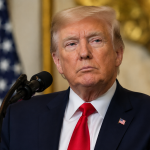
President Donald Trump warned that additional U.S. military action remains possible if Iran continues targeting American forces or regional allies.
The White House stated that Washington’s objective is to safeguard freedom of navigation, protect U.S. personnel, and maintain regional security, while continuing to leave the door open for diplomacy if Iran halts its attacks.
Iran, however, rejected Washington’s position, arguing that its military operations are defensive measures undertaken in response to repeated U.S. strikes.
Oil Markets React
The latest escalation has heightened concerns over global energy supplies, with investors closely monitoring developments around the Strait of Hormuz.
Analysts warn that prolonged disruption to Gulf shipping could significantly impact international oil exports, increase transportation costs, and place further pressure on global energy markets.
Outlook
Diplomatic efforts to de-escalate the crisis remain stalled as both Washington and Tehran continue military operations. International observers have warned that further exchanges could draw additional regional actors into the conflict, increasing the risk of a broader Middle East war.
Despite repeated international calls for restraint, both sides have signaled they are prepared to continue military action unless their respective strategic objectives are met.
________________________________________________________________________________________________________________