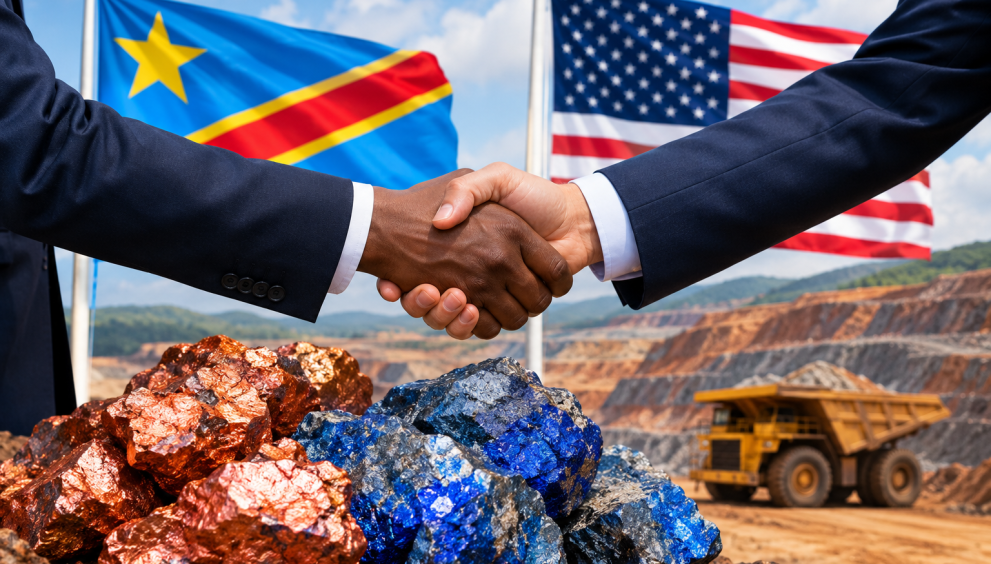
The Democratic Republic of Congo has established a dedicated DRC-USA Task Force to accelerate implementation of its strategic minerals partnership with the United States, according to cabinet minutes reviewed by Reuters.
The task force is expected to help translate commitments under the partnership into concrete investment, mining and economic projects. Congolese Economy Minister Daniel Mukoko Samba said the initiative is intended to ensure that the agreement delivers tangible economic and security benefits for the Congolese population.
Push to Reduce Dependence on China
The move comes as Kinshasa seeks to attract more Western investment into its critical-minerals sector and reduce its dependence on Chinese financing and markets.
The DRC is one of the world’s most important producers of copper and cobalt, minerals that are essential for electric vehicles, batteries, electronics and other strategic industries. The United States has been seeking to diversify its critical-mineral supply chains as competition with China intensifies.
The broader U.S.-DRC strategic partnership is designed to encourage American investment and greater local value addition in the Congolese mining sector. The agreement also provides for mechanisms intended to improve U.S. access to minerals destined for export.
Investment Already Underway
The partnership has already produced several developments, including U.S.-backed investment through Virtus Minerals and expanded mineral sales arrangements involving state mining company Gécamines and international commodities firms including Mercuria and Glencore.
However, the launch of the task force had reportedly been delayed since February because of administrative difficulties. Its creation signals a renewed effort by Kinshasa to move the partnership from political commitments toward practical projects.
Strategic Importance
The agreement carries significance beyond mining. Washington sees the DRC’s vast mineral reserves as part of a broader effort to build alternative supply chains for critical resources, while Kinshasa wants greater foreign investment, infrastructure development, jobs and economic diversification.
The development also comes amid a wider U.S. push to secure critical minerals across Africa. Washington has recently backed initiatives involving countries including Kenya and Rwanda as it seeks alternatives to supply chains dominated by China.
For Congo, the challenge will be ensuring that increased foreign investment translates into local economic benefits, transparency and greater domestic processing rather than simply expanding the export of raw minerals.